ICSSPE champions inclusive innovation at ASAPE 2026 in Shanghai
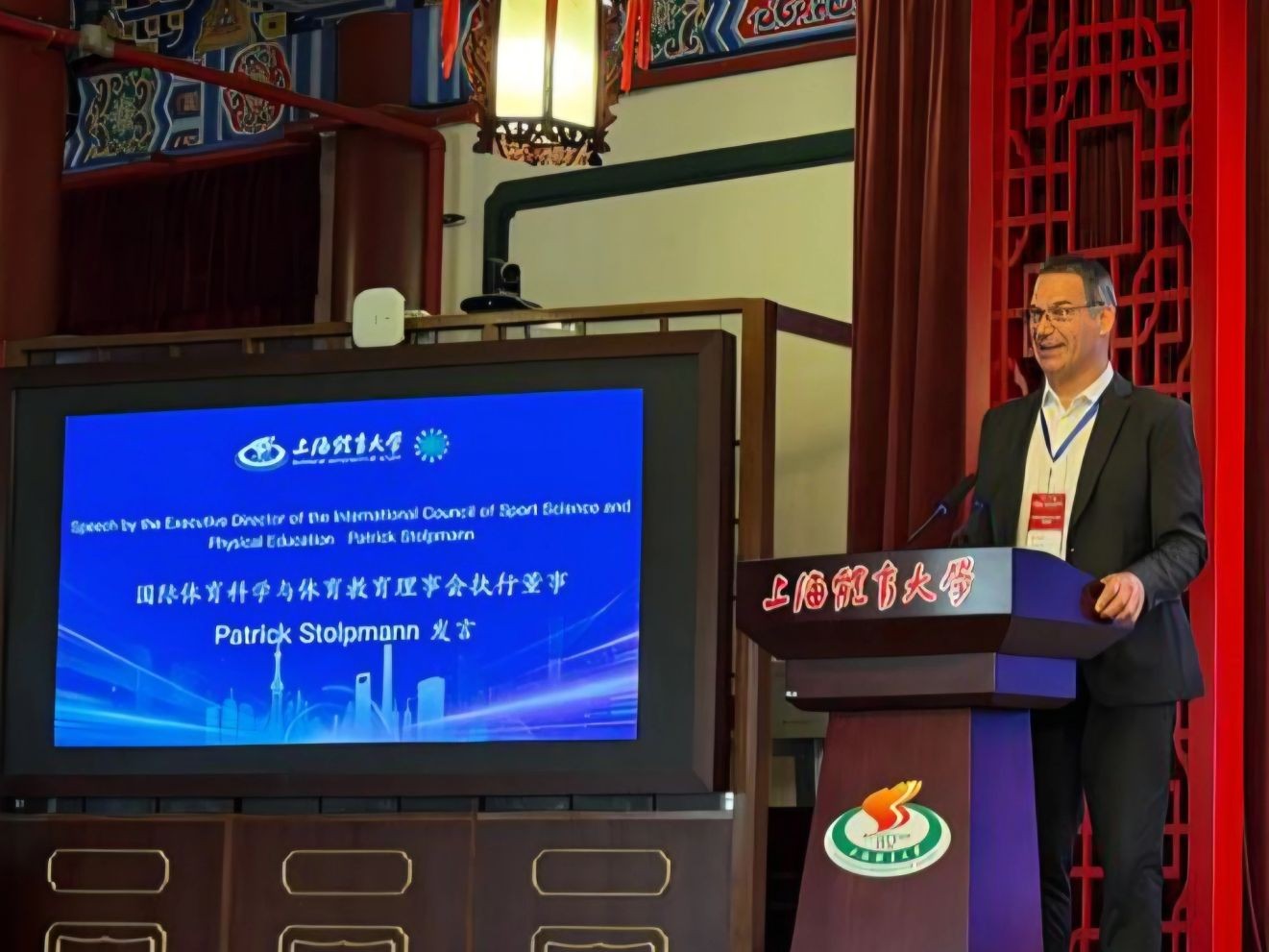
ICSSPE Executive Director Patrick Stolpmann participated in and delivered opening remarks at the 2026 International Symposium of the Asian Society for Adapted Physical Education and Exercise (ASAPE), held from 15 to 17 July at Shanghai University of Sport in China.
The 2026 symposium marked ASAPE’s 19th biennial meeting and brought together researchers, educators, practitioners, students and policy-makers working in adapted physical education, adapted physical activity, rehabilitation and exercise science. As the Asian branch of the International Federation of Adapted Physical Activity (IFAPA), ASAPE provides an important platform for advancing equitable opportunities in physical activity and sport for people with disabilities and other special needs.
Ensuring that innovation supports inclusion
Speaking in his roles as ICSSPE Executive Director and Disability Community Liaison for IFAPA, Patrick Stolpmann emphasised that physical activity, physical education and sport must be accessible to everyone, regardless of ability.
His opening remarks addressed the symposium’s theme, “New Tech, New Map,” and the growing potential of technologies such as artificial intelligence, wearable devices, robotics, virtual reality and digital health to support adapted physical activity, rehabilitation, education and participation.
While acknowledging the opportunities created by technological progress, he stressed that innovation should not be treated as an end in itself. New technologies must be developed and applied in ways that are inclusive, ethical and accessible.
He also highlighted the importance of actively involving people with disabilities in the design and implementation of technological solutions. Their lived experiences, priorities and needs must help shape how innovation is used in physical education, sport and rehabilitation.
“Technology can open new possibilities, but meaningful progress will depend on whether those possibilities are available to everyone,” Mr. Stolpmann said. “Inclusion, dignity and equal opportunity must remain at the centre of future developments.”
Connecting research, practice and policy
Throughout the three-day symposium, participants explored how emerging technologies could contribute to the future of adapted physical education and exercise. The programme created opportunities to present research, exchange professional experience and discuss new approaches to education, rehabilitation and participation.
The discussions also underlined the need to connect scientific research more closely with practical implementation. Effective innovation requires cooperation between researchers, educators, practitioners, technology developers, policy-makers and, most importantly, people with disabilities.
This approach closely reflects ICSSPE’s vision of educating for a sustainable quality of life for all through physical activity and sport. It also aligns with the Council’s commitment to strengthening international cooperation and supporting the exchange of knowledge between science, education, policy and practice.
Strengthening international cooperation
Participation in ASAPE 2026 provided an important opportunity for ICSSPE to deepen its engagement with the international adapted physical activity community and reinforce its longstanding relationship with IFAPA.
By contributing to the symposium, ICSSPE supported international dialogue on how research and technological development can be translated into inclusive and accessible opportunities for participation.
The ASAPE Symposium is organised every two years and provides participants with opportunities to exchange knowledge and experience in research, professional preparation, advocacy and service delivery in the field of adapted physical activity.